Financial Services
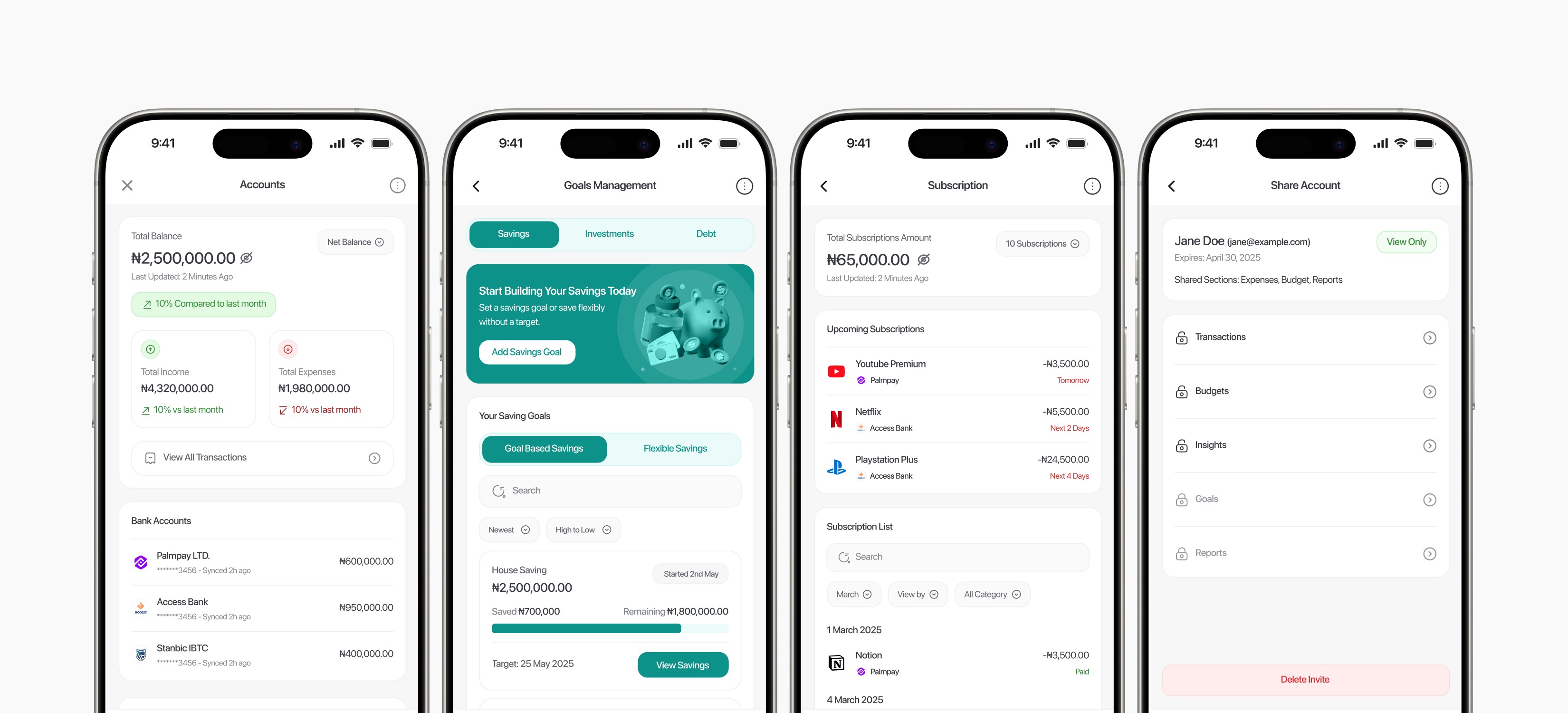
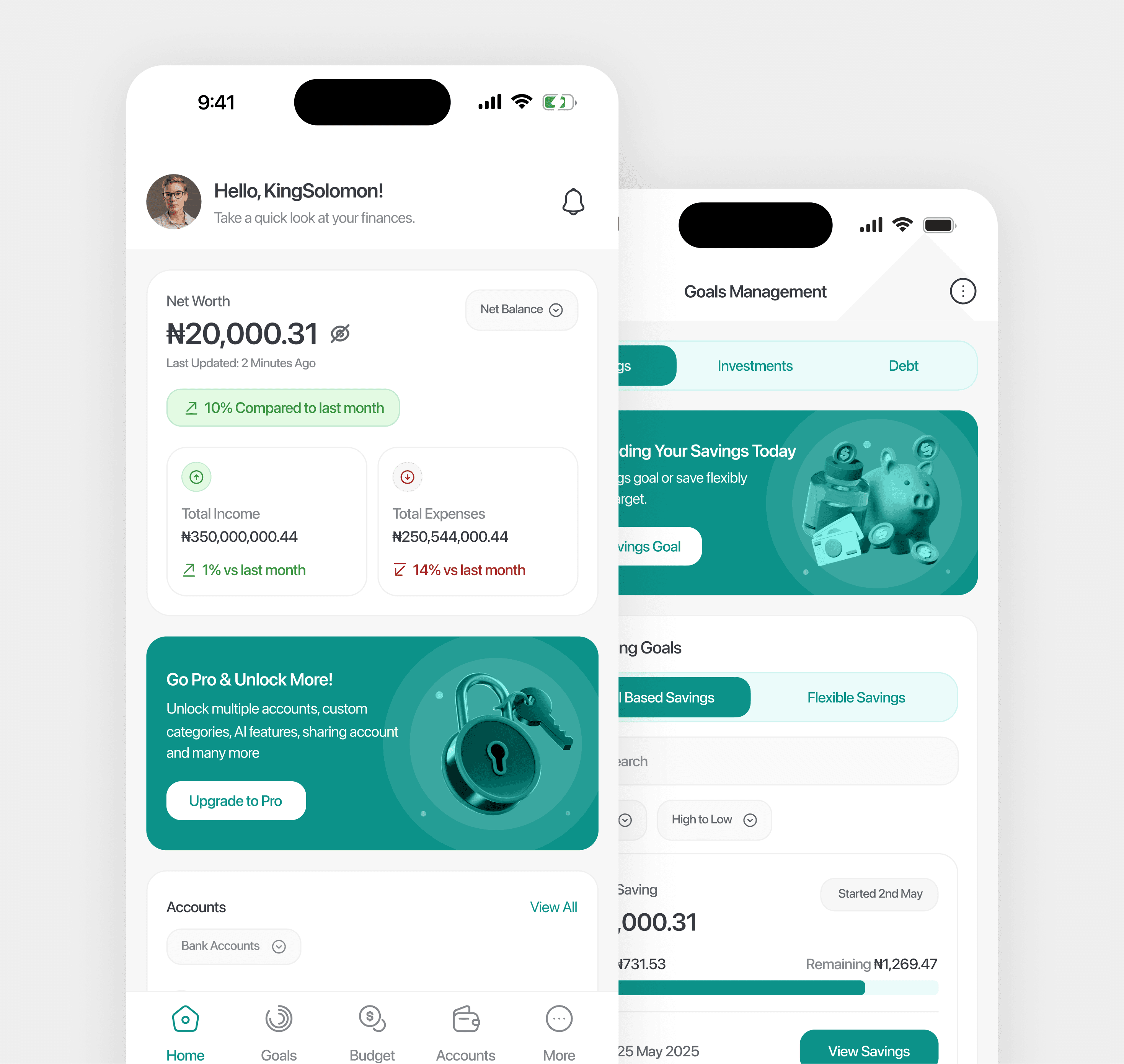
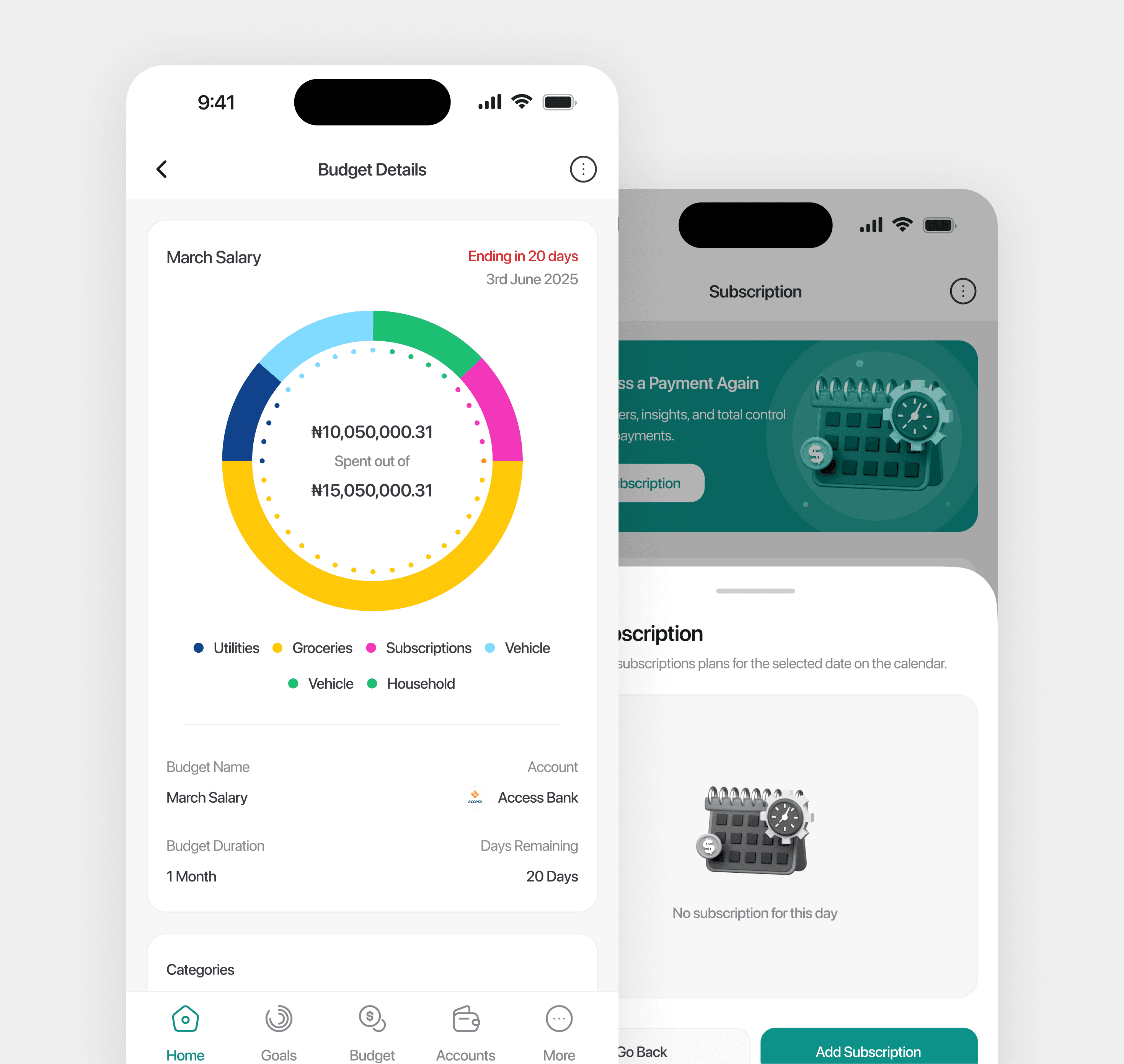
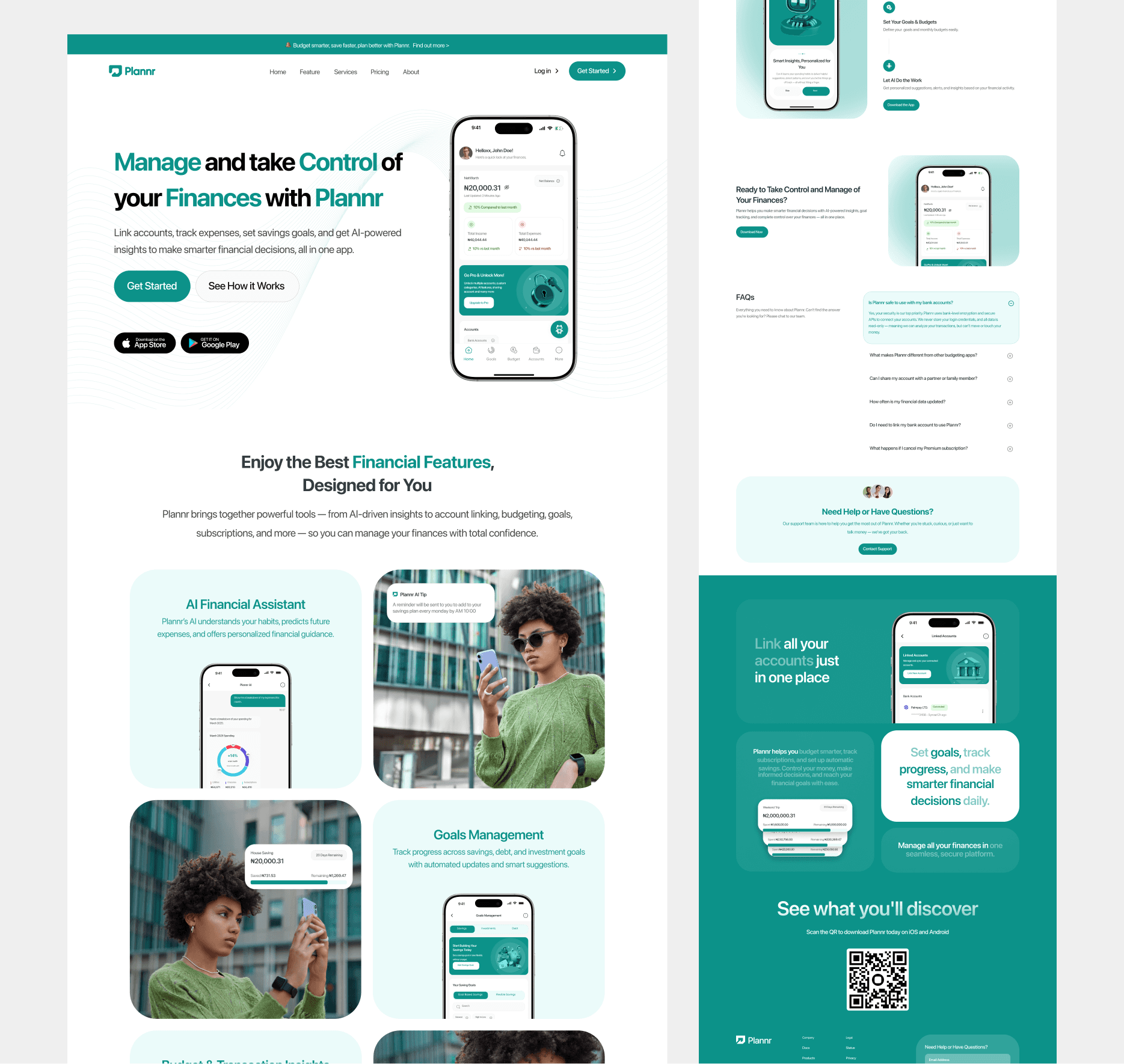
Plannr is an AI-powered financial management app designed to make money management simple and accessible. Users can link bank accounts, create and track budgets, set financial goals like savings, debt repayment or investments, manage subscriptions, monitor transactions, and even share accounts with others. The app focuses on clarity and organization, helping users stay in control of their money with ease.
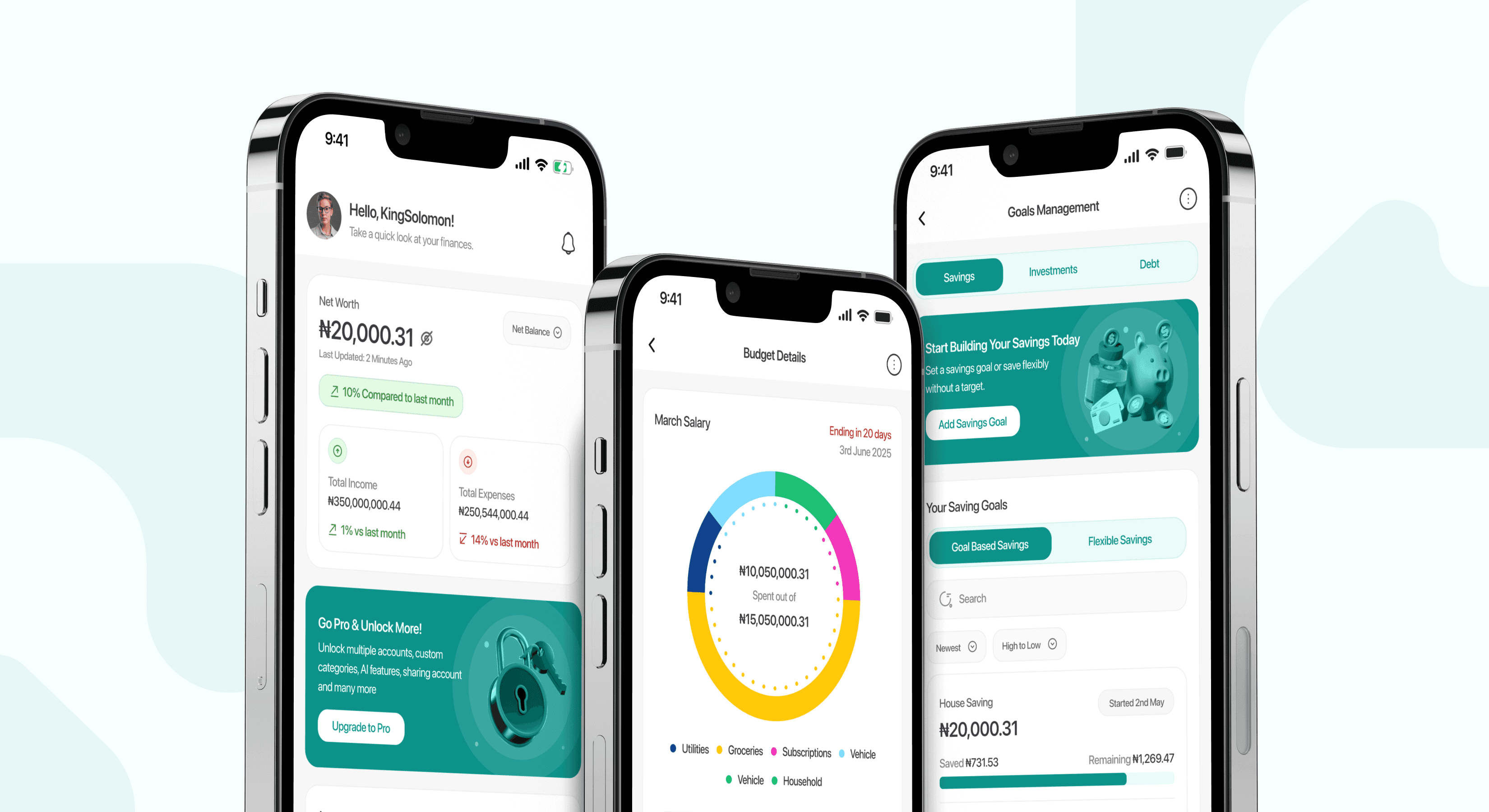
The Problems
Most personal finance tools are either too complex for everyday use or too narrow to cover everything a person actually needs. People want one place to see their money — but every tool they try makes that harder, not easier.
The clearest gaps:
Budgets built on rules instead of real spending patterns
Subscriptions that pile up silently until users check their bank statement and wonder where the money went
Financial goals that get set once and abandoned because there's no feedback between intention and actual behaviour.
Discovery & Research
The research pushed toward three directions. First, users wanted everything aggregated, but the moment onboarding required more than two manual steps to link an account, they stopped. That shaped the decision to prioritise a guided, one-at-a-time account connection flow rather than a bulk-import screen. Second, savings goals failed not because users didn't set them but because nothing reminded them when they were drifting, which became the basis for the in-app nudge system tied to transaction categorisation. Third, subscriptions: most users didn't realise how many they had until they saw a list. The subscription manager started as a discovery feature, not a cancellation one.
Key Findings
People want one app that brings all their bank accounts and spending together.
Many set financial goals but abandon them because tracking feels too complex.
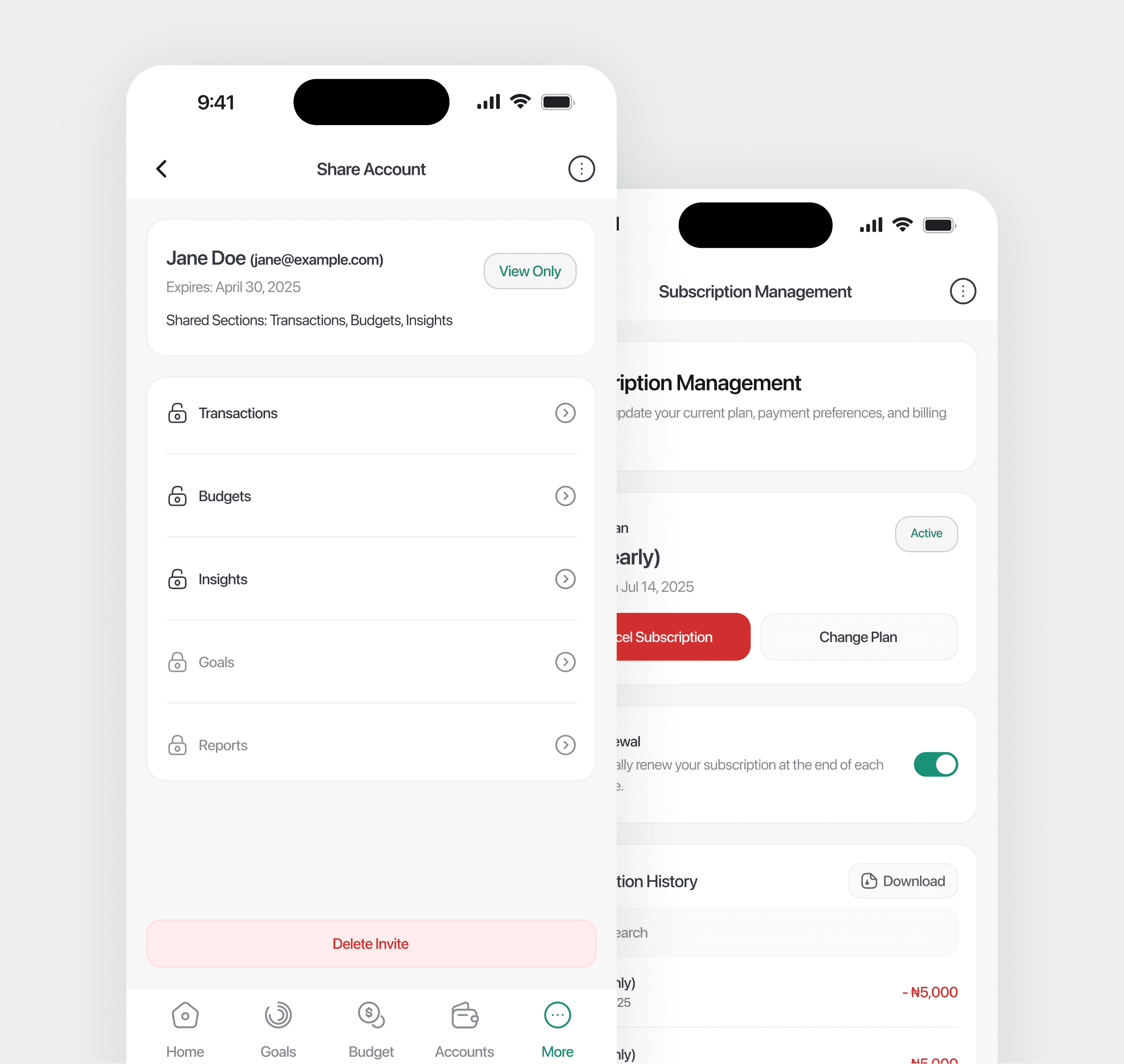
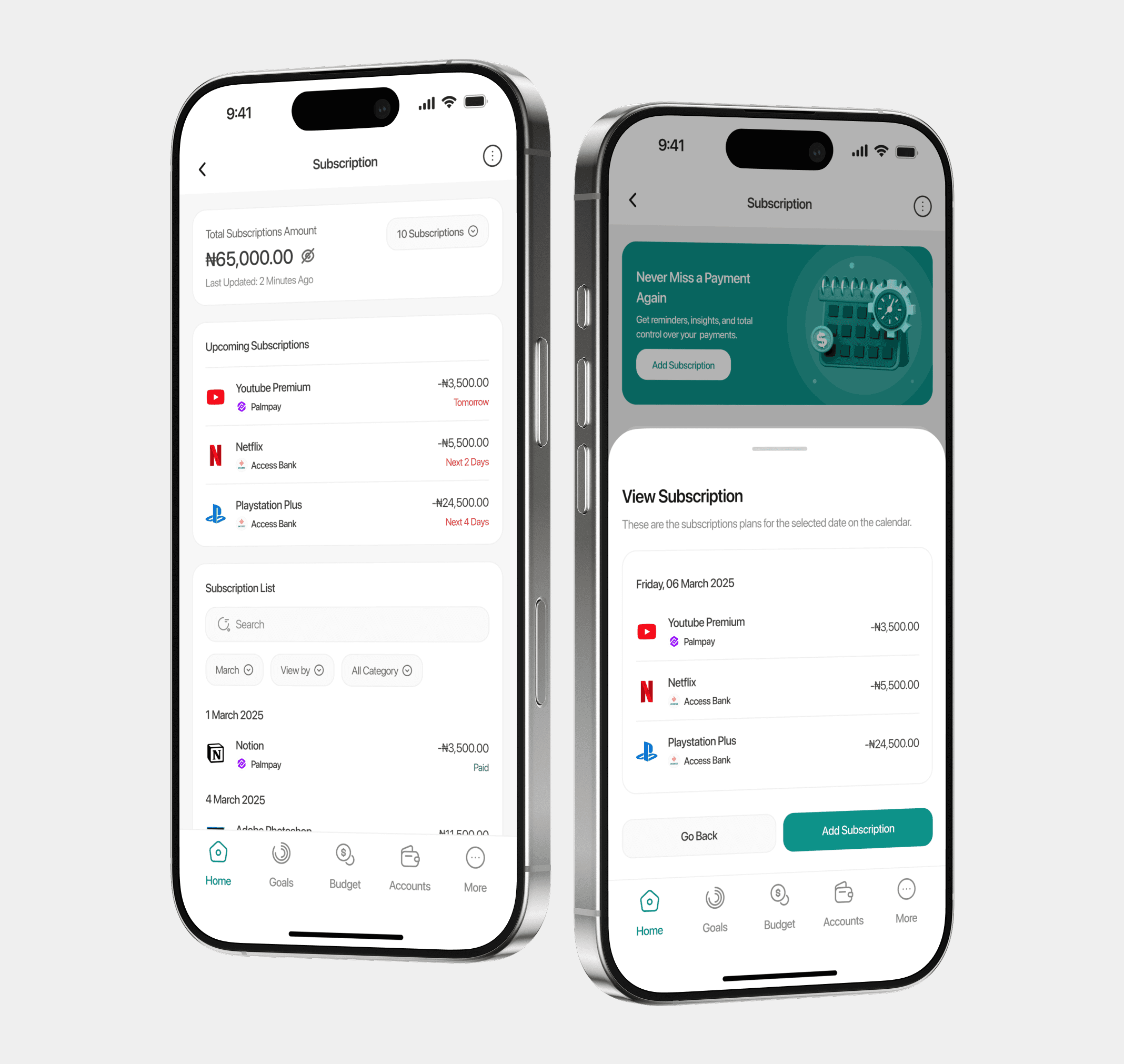
Subscriptions are often forgotten, leading to wasted money each month.
AI is welcomed if it simplifies tasks, but users do not want it to feel complicated or overwhelming.
Metrics & Support Data
Over 60% of adults say they struggle to stick to a budget consistently.
The average person pays for 3–5 forgotten subscriptions per year.
Global usage of personal finance apps grew by 90% in the last five years, showing increasing demand.
In Nigeria, financial literacy is low, with less than 30% of adults considered financially literate, making clarity essential.
Competitor Analysis
To understand where Plannr fits, I reviewed existing financial management apps. This helped me see what they do well, where they fall short, and how Plannr could deliver a clearer, more user-friendly experience.

Pros
Connects to multiple bank accounts for easy tracking
Provides spending insights and breakdowns
Widely known and trusted in the personal finance space
Cons
Interface feels cluttered and overwhelming
Focused mainly on the US market, less useful globally
Not very beginner-friendly, takes effort to understand

Pros
Strong budgeting system that encourages discipline
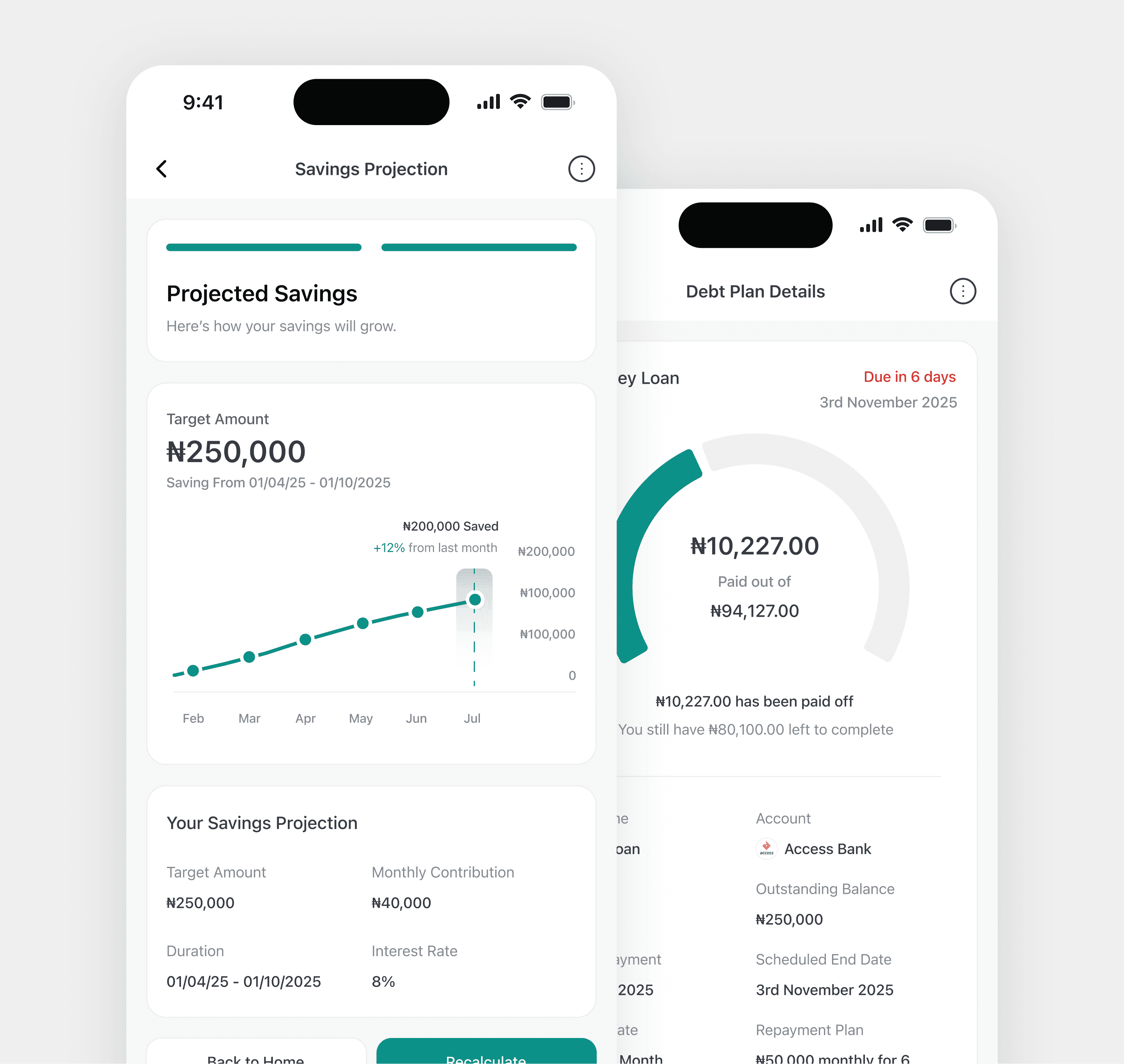
Effective goal-tracking for savings and debt repayment
Great for long-term financial planning
Cons
Steep learning curve that discourages new users
Expensive subscription model compared to alternatives
Too complex for people who just want simple money tracking
From studying Mint and YNAB, I saw that people like useful insights and goal tracking but are discouraged by complex design and high costs. I used these lessons to make Plannr simple, clear, and easy to use while keeping the important features that help people manage money better.
The Solutions
Plannr was designed to solve the common struggles people face with money. The app focuses on making financial planning simple and clear, while giving users the right tools to stay on top of budgets, goals, and everyday expenses.
02
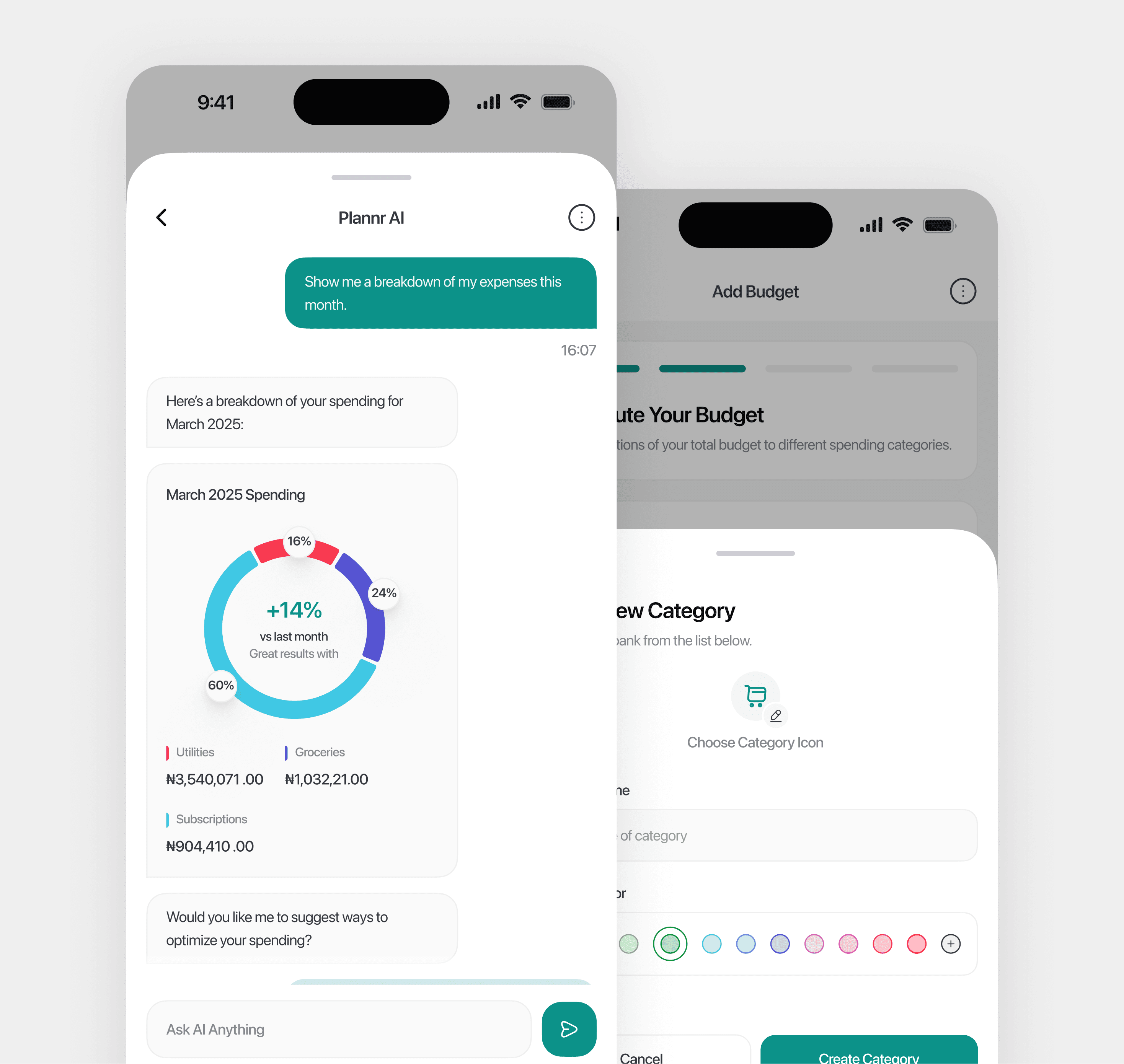
AI-powered budgets
Budgets that adjust to actual spending habits, giving users relevant guidance instead of rigid rules.
Final Screens
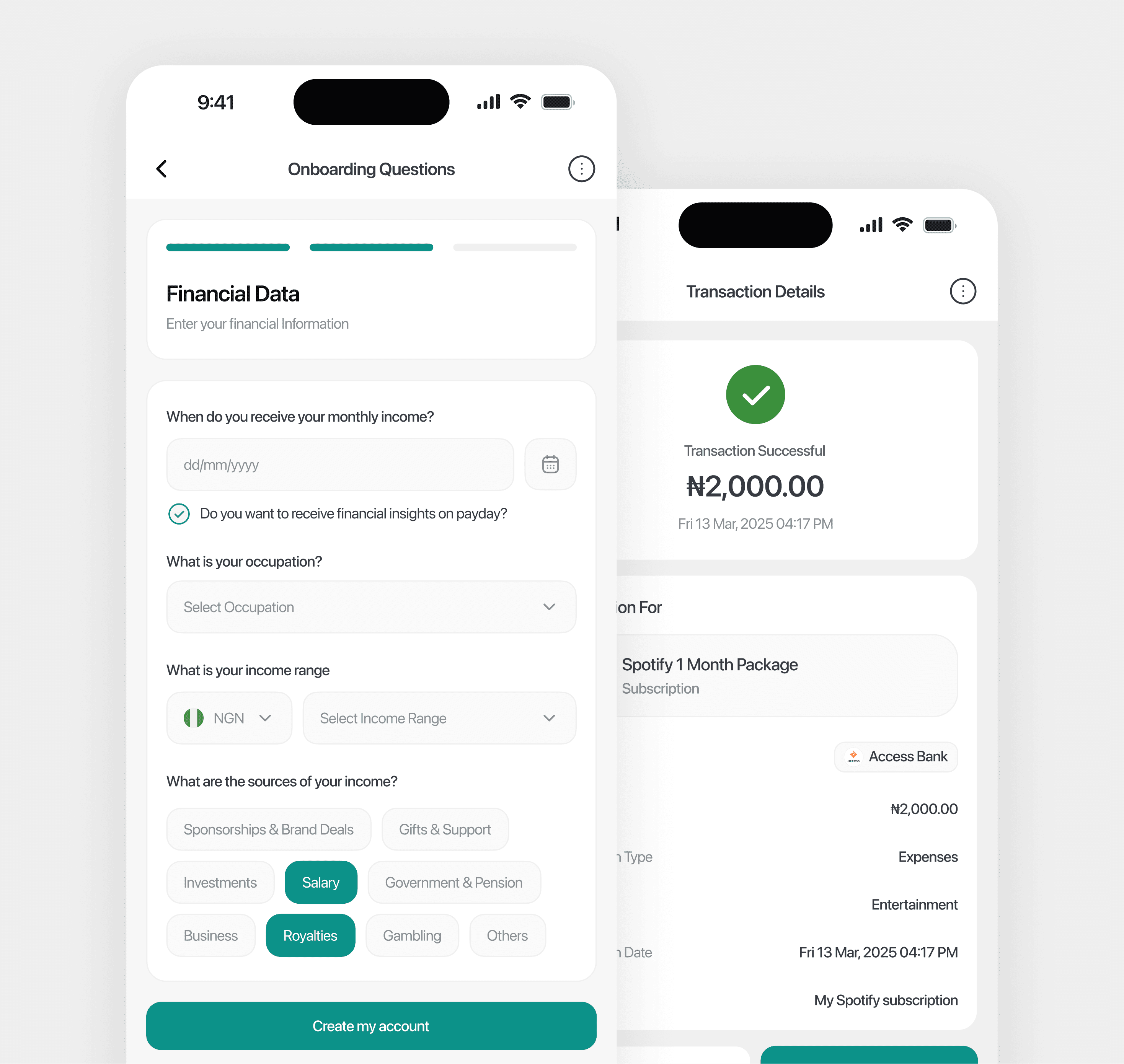
From onboarding to daily use — five core flows across twelve screens: account linking, budget creation, goal tracking, subscription overview, and transaction detail.
My Role, Goals & Impact
The goal was to make money management simple, clear and easy for anyone to follow. My role was to design the experience and turn these financial tools into something people can use every day. The impact is an app that helps users stay on top of their budgets, track their goals, manage subscriptions, and understand their finances with more confidence.
My Goals
Make financial management simple, clear, and accessible for everyday users
Help people stay consistent with budgets and financial goals
Reduce wasted money from forgotten or duplicate subscriptions
Build trust in AI by keeping insights easy to understand
My Role
Researched user pain points in budgeting, saving, and subscription tracking
Analyzed competitor apps to identify strengths and gaps
Defined the product’s core features and user flows
Designed high-fidelity UI screens for budgets, goals, and subscription management
Built a design system to ensure clarity and consistency across the app
My Impact
Internal testing showed users completed the full budget-setup flow in one session, compared to the multi-session drop-off pattern we saw in competitor research. The subscription manager's discovery-first design surfaced an average of four previously untracked recurring charges per test user. The goal-tracking module was the most-used feature in prototype testing — users returned to it between tasks unprompted, which we hadn't expected and shaped how prominently it sits in the nav.
More Work
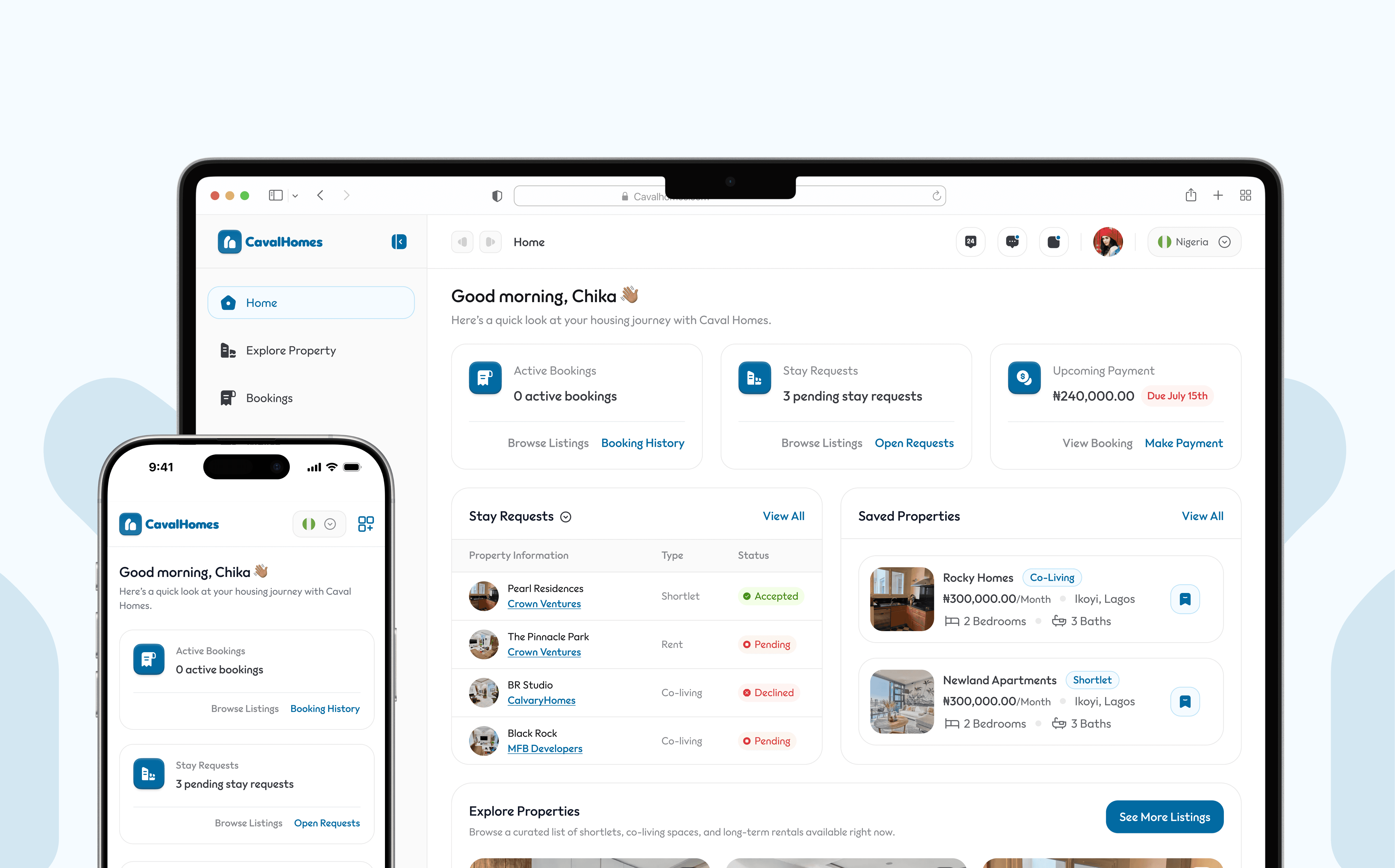
Caval Homes
A platform enabling users to buy, rent, or co-live in verified properties with flexible payment options and seamless booking flows.
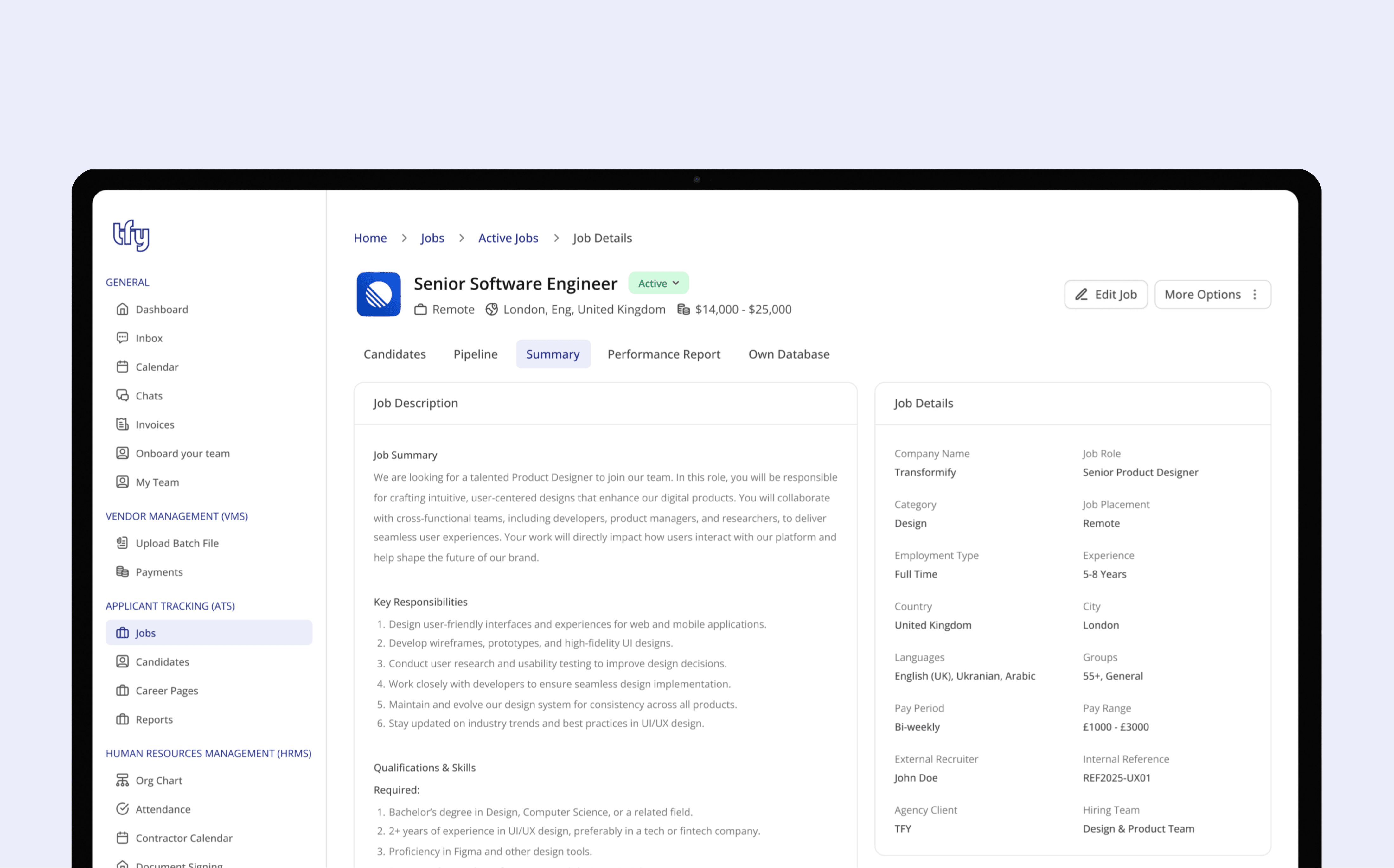
Transformify
A global HR platform redesigned for consistency, scalability, and better user experience across contractors in 184 countries.
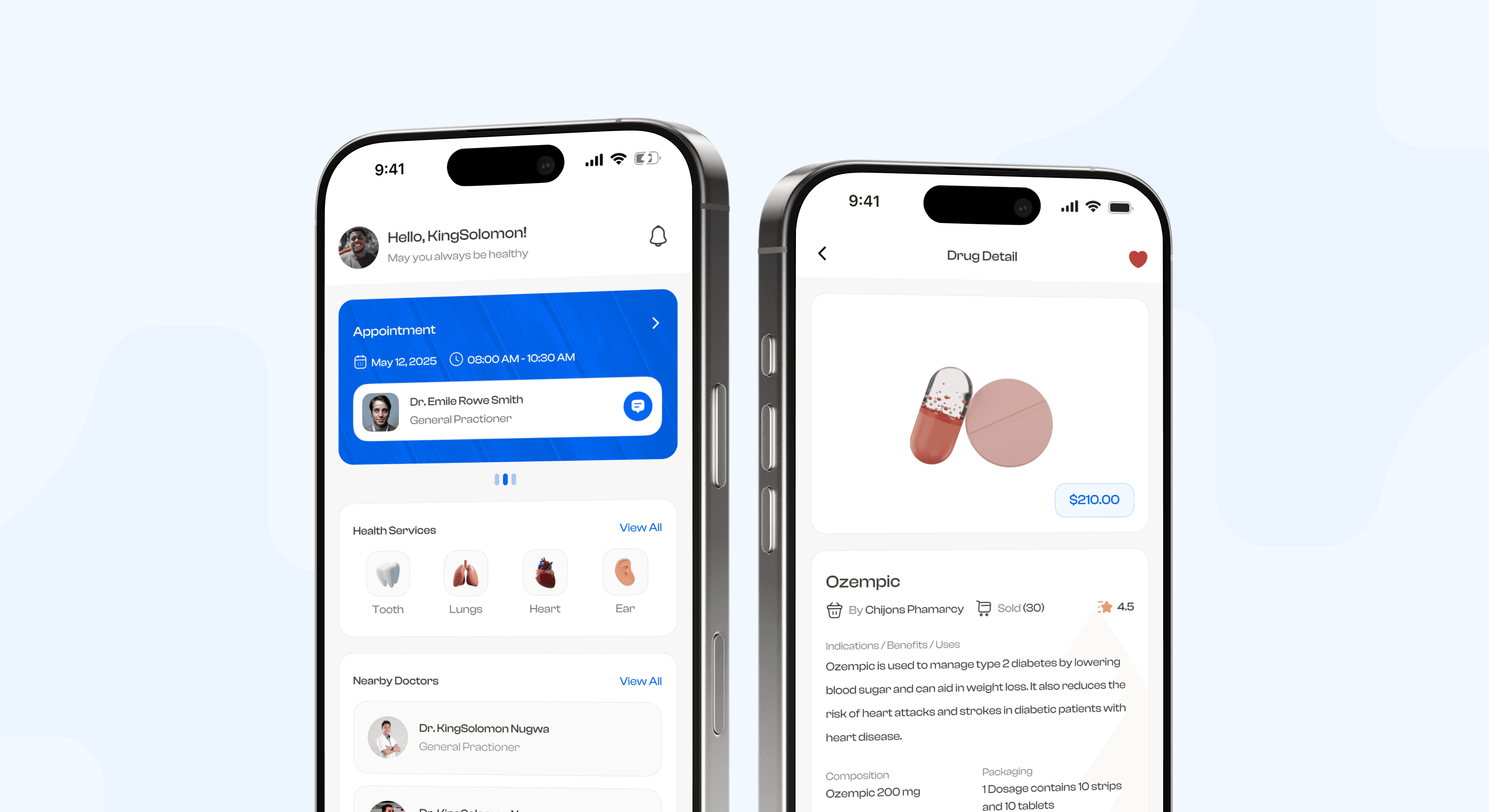
MediCare
Connecting patients with verified doctors for online and offline consultations, simplifying booking and virtual care delivery.